Position sizing, stop-loss and trading journal for Indian swing traders.
The complete risk-first trading platform for swing & positional traders.
Discover → Analyse → Plan → Manage Risk → Execute → Manage → Review → Improve
Or one month free with no payment details.
Equity and futures · Dhan · Fyers · Zerodha · Angel One


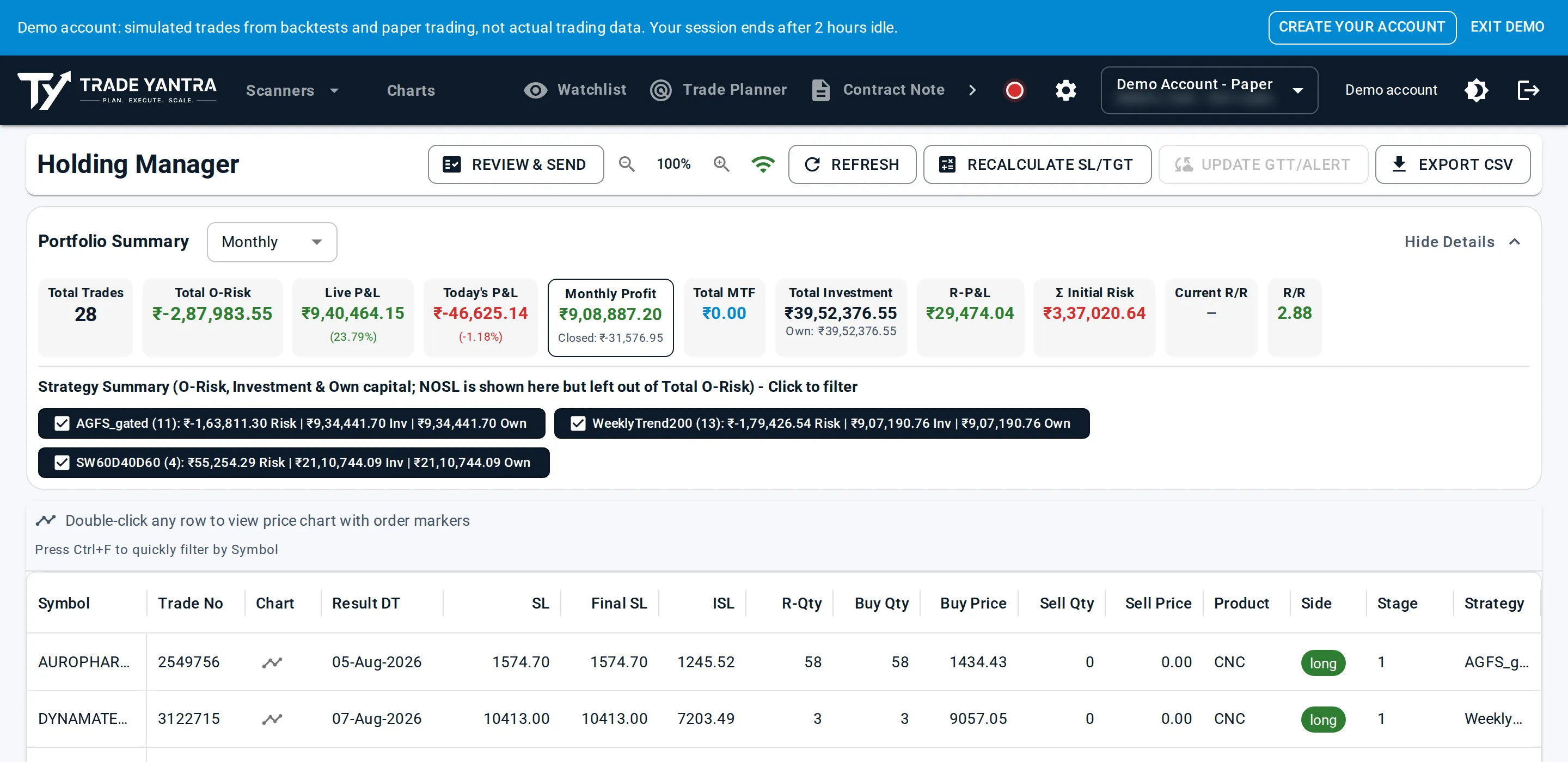
Demo account · simulated trades, not actual trading data.
Your trading night
The same eight steps, every evening. Nothing is skipped — the work still happens. You just stop being the one who does it.
On Connected, one click. On Core, you place them at your broker, and everything else is the same.
The three you keep are the three that need a person: deciding what's worth taking, and authorising what goes to your broker. Everything between them is arithmetic.
Every number computed the same way, every time. Position size from your risk-per-trade, stops from your own formulas, costs to the paisa.
Every position handled the same way — on a busy evening as on a quiet one, whether or not you were watching. The standard doesn't slip because you were tired, travelling or distracted.
Eight steps become three. The hours you used to spend on arithmetic go back to you, and the work still gets done.
Try the arithmetic yourself, free: Free trading tools.
Your effort stops scaling with your position count. Hold four or forty and the evening takes about the same time — so how many you run becomes a decision, not a limit.
The three you keep
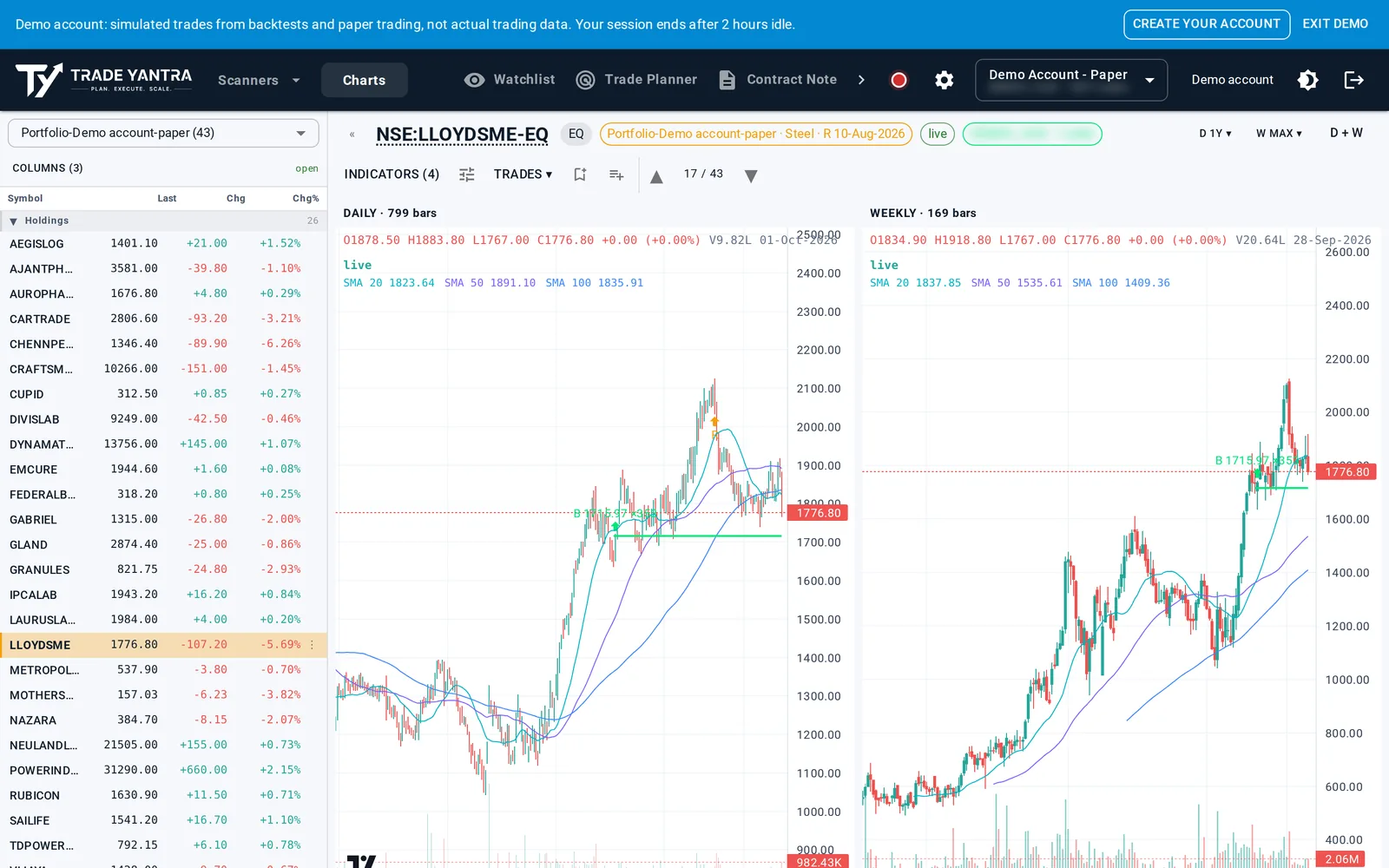
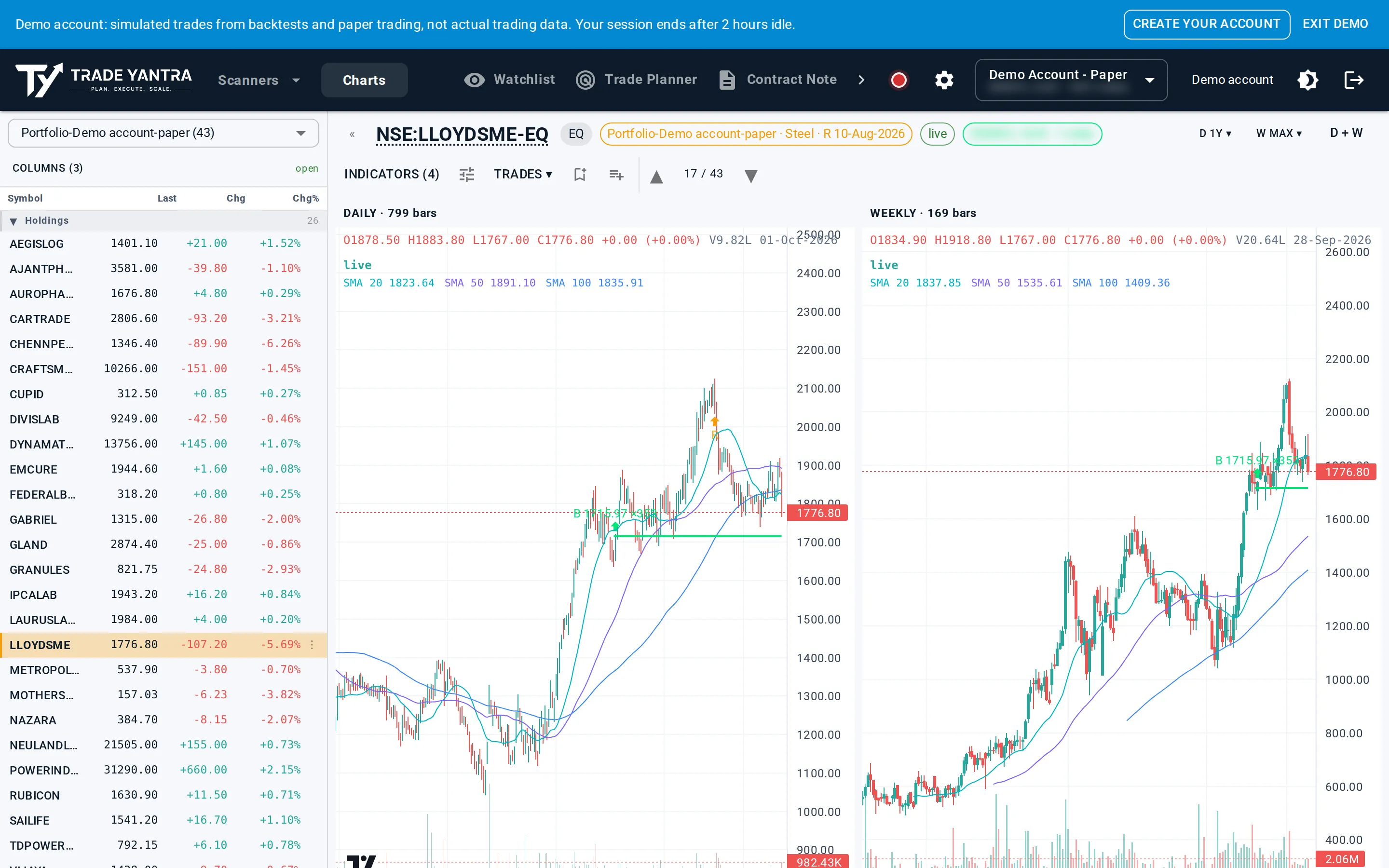
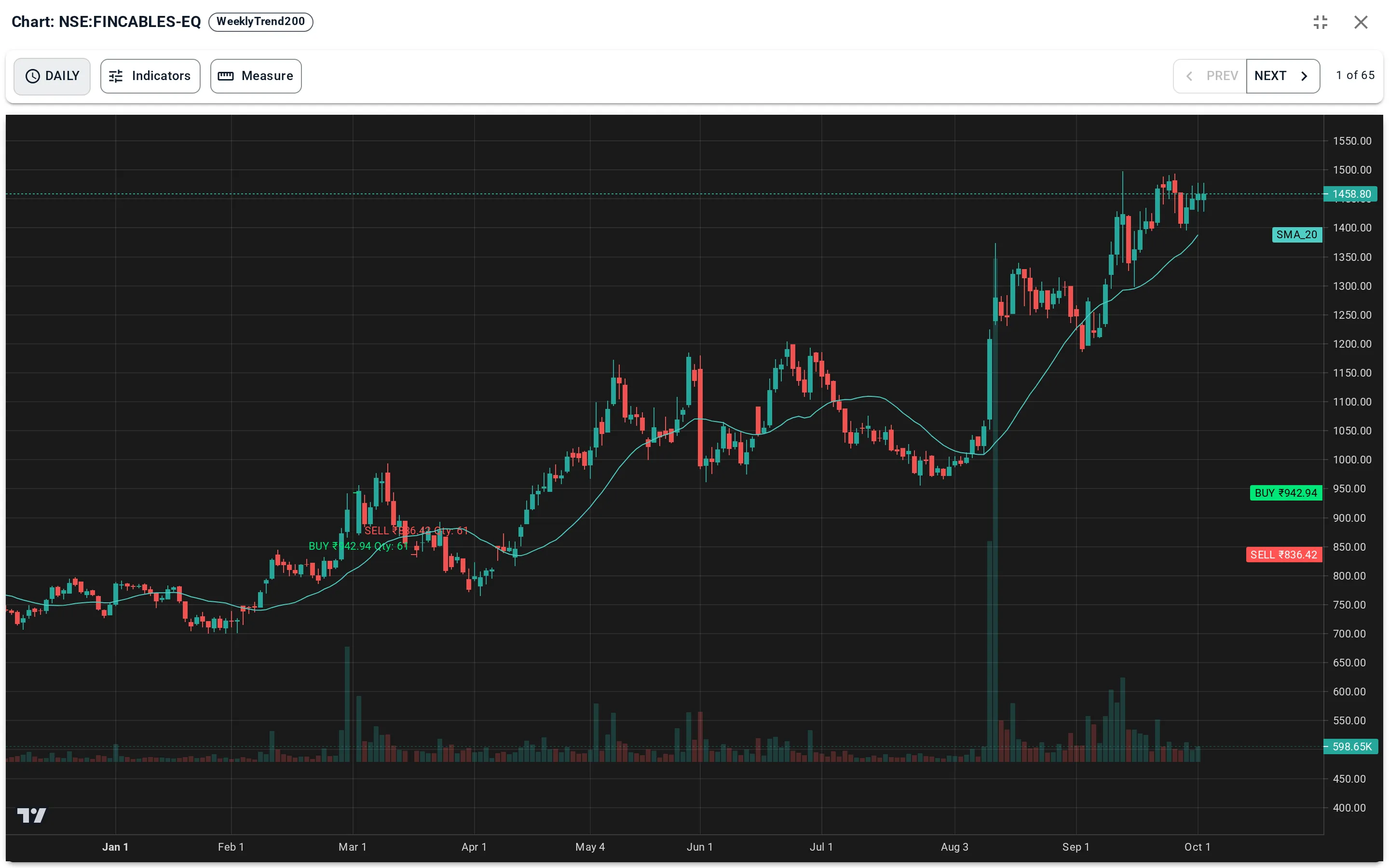
Scan results open straight into daily and weekly charts with your moving averages, RSI and ATR. Arrow through the whole filtered list one chart at a time — each carrying its scanner, sector and earnings date, so you always know why it's in front of you. Or push the list into TradingView and work there.
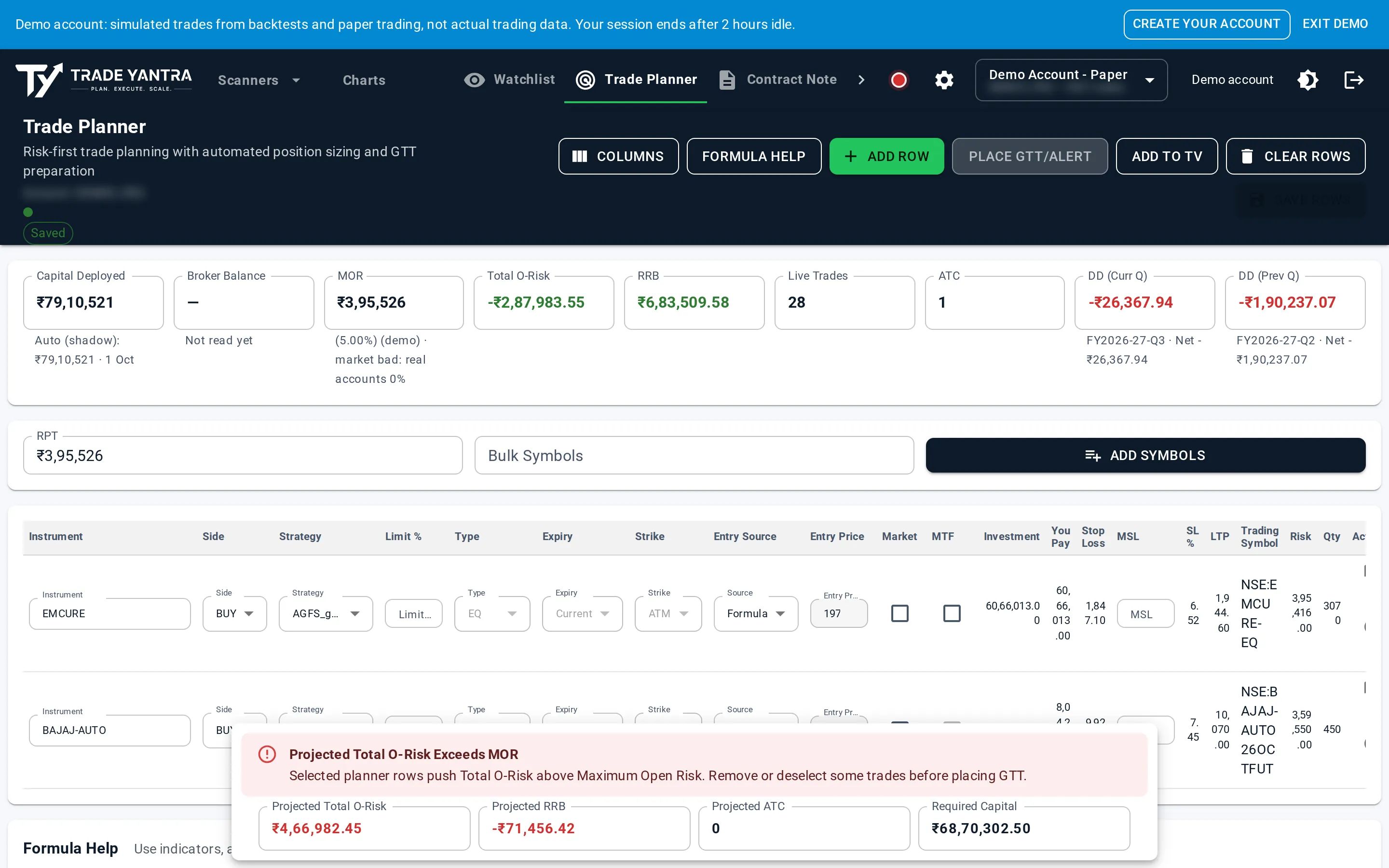
Add symbols one at a time or paste a whole list. Pick your strategy. Entry, stop and quantity are computed for every row against your own risk-per-trade — with the cash and margin each needs, your live open risk, what it would become if you took them, and this quarter's and last quarter's drawdown after every charge sitting beside it. If the basket would break your ceiling, it says so and won't place. On Connected, one click sends the rest; on Core, you place them at your broker.
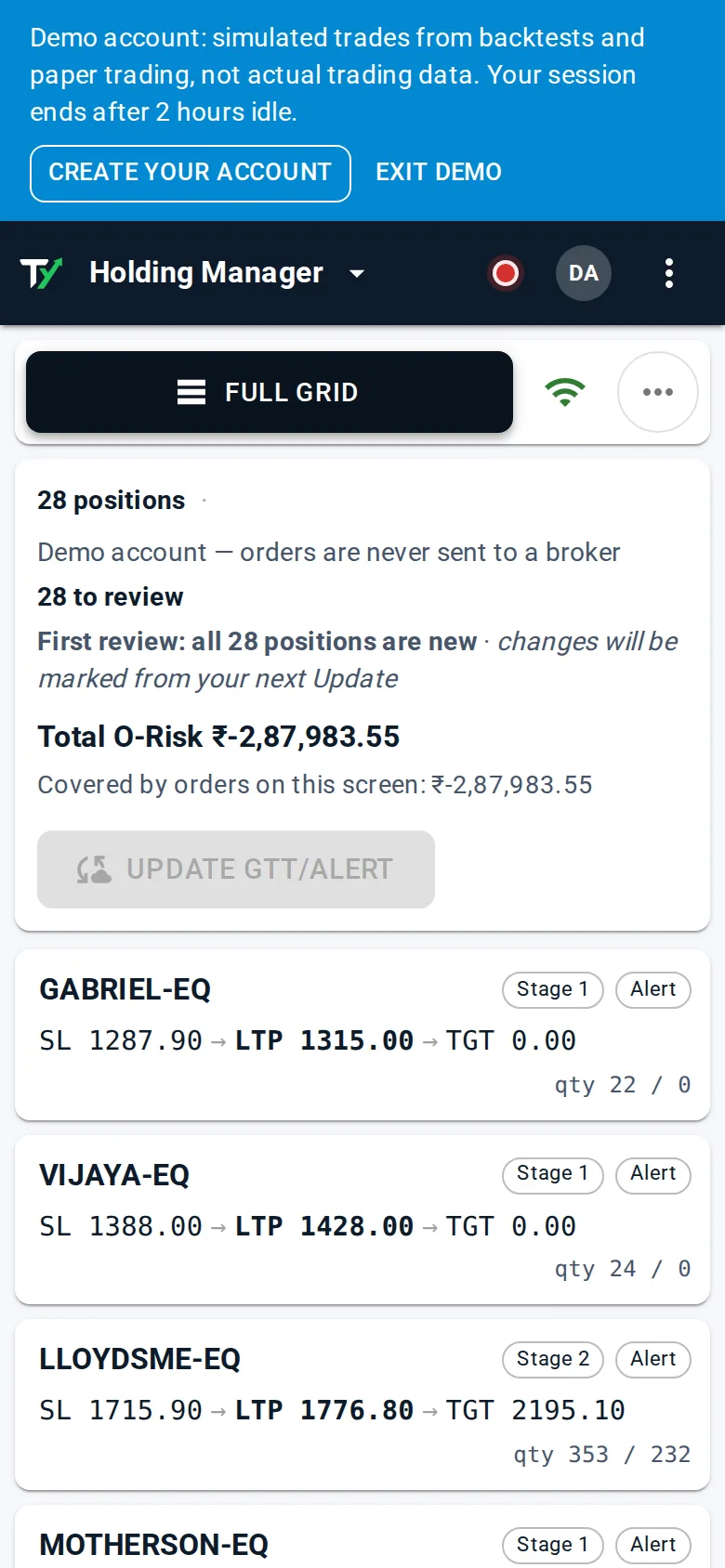
Every open trade already has its stop, stop quantity, target and target quantity worked out for the stage it's reached. You look at what changed since last time — usually a handful of rows — and press once, or set a time and your stops and targets go by themselves. Thirty seconds, from your phone if you like.

The five you don't
Not features. Work you used to do by hand, that now simply exists when you look.
Day one
Not the ninety days your broker will export. As far back as your broker's records go.
All of it before you place a single trade through us.

Who arrives here
One already makes money and wants to stop the arithmetic capping their book. The other is finding out whether their method works, and would rather find out cheaply. Both need the same thing underneath.
You're not here for ideas. You're here because the evening work has stopped being worth the hours it takes.
Most traders don't lose because they pick badly. They lose because they size by feel and add capital after a good month instead of after evidence.
That's how a new trader becomes a winning one — risk under control, rules applied the same way every time, and evidence to scale on.
Whose system is it
You bring the chart read. We run everything after it.
You write your system once, as formulas — for each stage of a trade: where the stop sits, where the target sits, and how much quantity each covers. Stops against ATR, moving averages, swing lows, the entry-day three-day low. Targets as multiples of the risk you actually took.
Most traders arrive with a method that lives in their head and a spreadsheet. Translating it is the work, and we do that with you. Three strategies ship as worked examples — Swing, Positional and Investment — to show what the language can express, not to tell you how to trade.

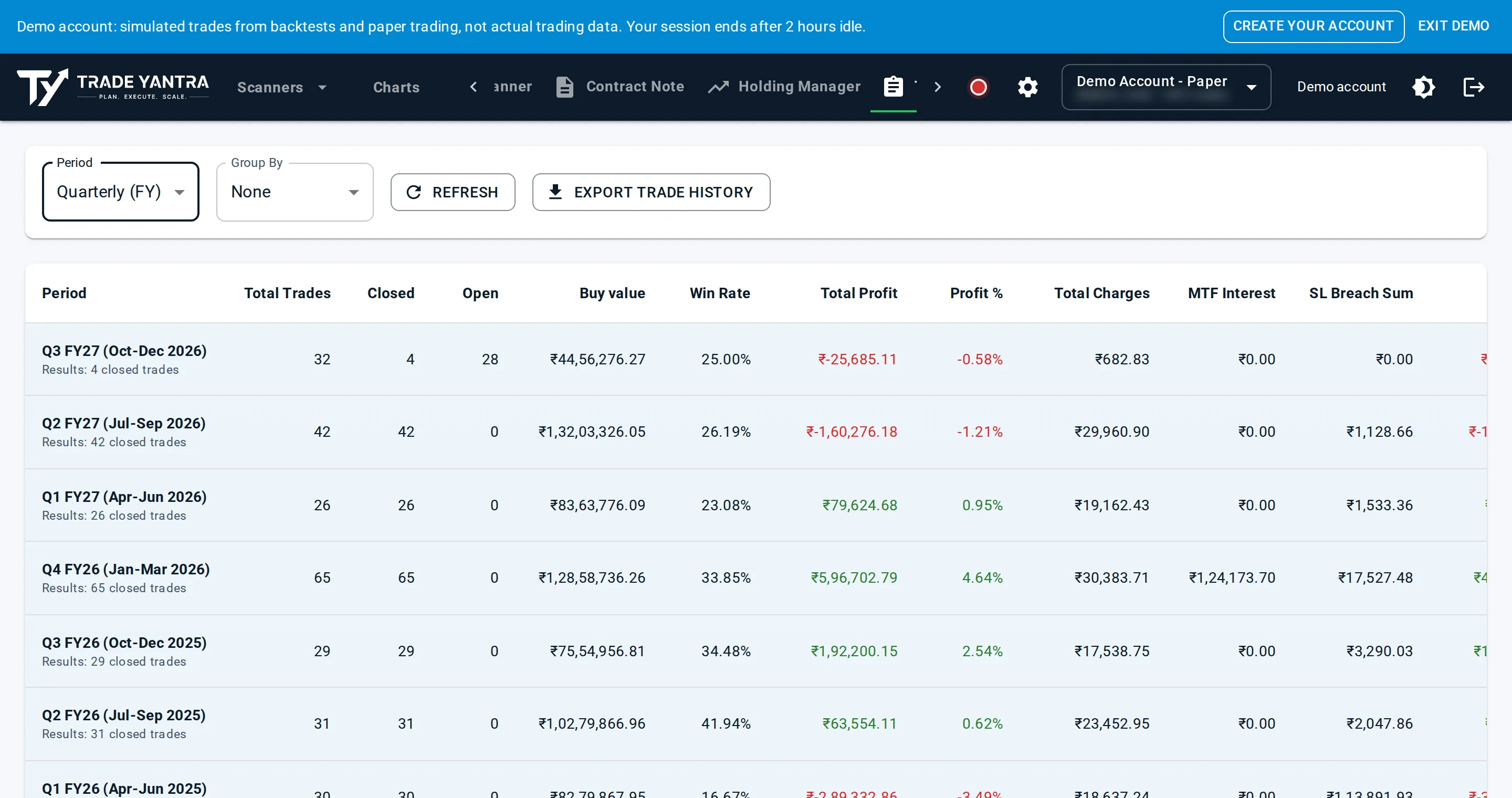
And at the end of the quarter
Three columns most traders never get to see:
With win rate, average reward-to-risk and profit factor per quarter, after every charge.
Your account, your machine
These aren't policies. They're how the system is built.
On Connected, broker API keys are entered into the executor during setup and stay on the machine that runs it: in the Windows Credential Manager on Windows, or in an encrypted store sealed to your own Linux cloud server. Our servers never receive them, store them, or have any way to access them. On Core there's nothing for us to hold at all: you place the orders at your broker.
We compute. You authorise — stops and targets when you press Update GTT/Alert or at a time you schedule, entry orders only when you press Place. Your machine executes, from your own registered IP as SEBI expects. Approve from your phone if you like — only the execution is tied to your machine.
Which stop and target orders should exist, and confirmation of what was placed. Order data only.
Your formulas live in your account. They're never shared, published, or offered to anyone else. We don't run a strategy marketplace and we never will. Remove your credentials any time — because they only ever existed on your machine, removing them there removes them completely.
Plainly
Equity and futures, long and short. Every position sized by risk. A stop decided before entry. Exits scaled in stages. A portfolio held to a ceiling you set yourself. That is the whole product — and you point it at whatever your own analysis tells you to trade.
Most automation built for this market is aimed at options speculation. This isn't. It's built for traders holding equity for days, weeks or years, who want their own method run properly.
Honestly
That the selection is yours. TradeYantra deliberately ships no tips, no signals and no stock ratings — because the traders it's built for already read charts well, and that judgement is the part worth keeping.
What it replaces is everything after the decision: the sizing, the risk arithmetic, the exits, the costing and the record.
Pricing
That's not a coincidence. A quarter is how long it takes to produce your own numbers: win rate, average reward-to-risk, profit factor — after every charge.
If your method already works, three months is long enough to confirm we run it exactly as you intended, on a book of the size you actually trade. If you're still proving it, three months is your first honest read — on a small account, with real costs.
Either way you'll be deciding from your own trades, not our marketing.
Or one month free with no payment details.
The work still happens. You just stop being the one who does it.
Equity and futures · Dhan · Fyers · Zerodha · Angel One